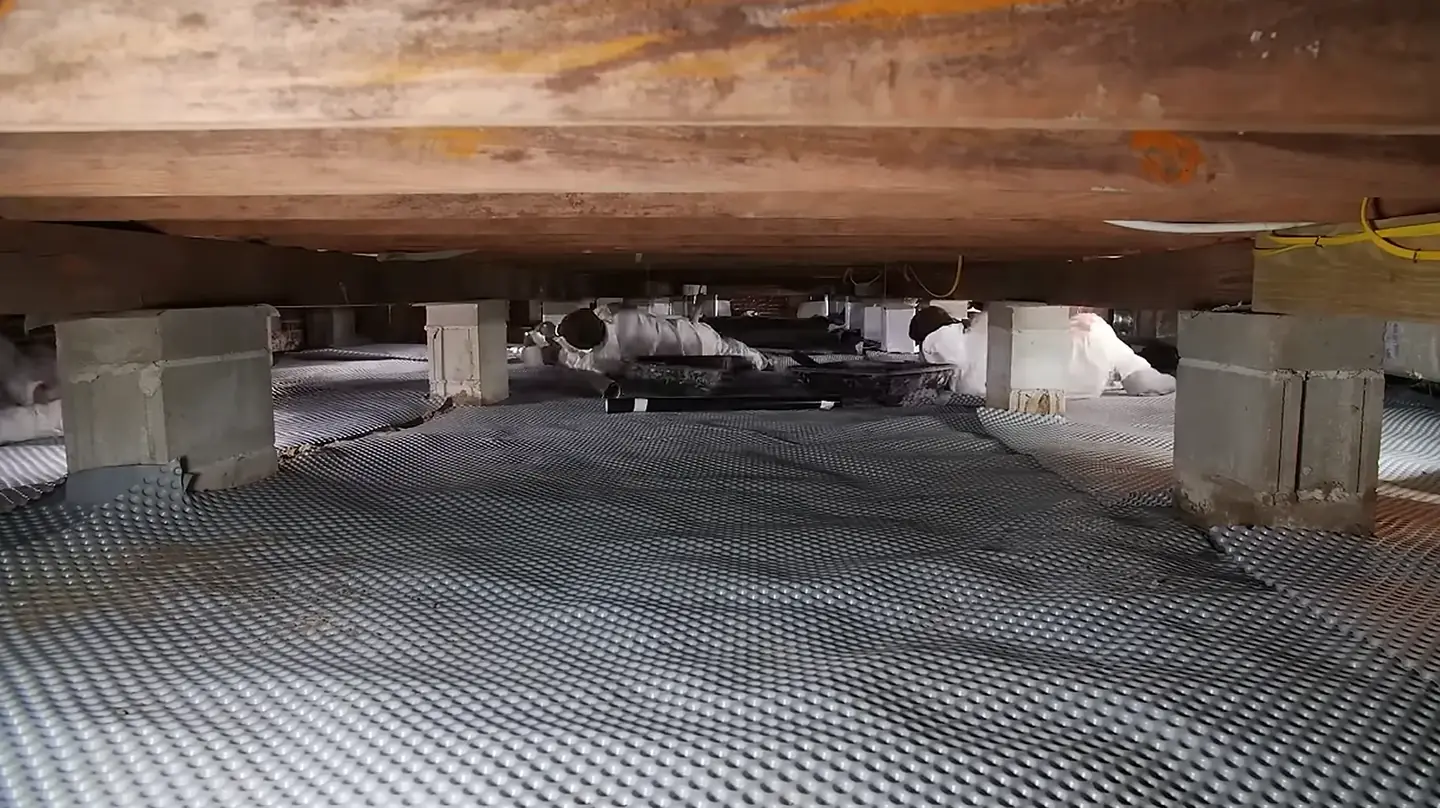
Initial Crawl Space Inspection
The first step is understanding where the water is coming from and how it has affected the space.
An inspection may include checking visible standing water, plumbing connections, drainage pathways, insulation, exposed floor framing, and signs of prolonged moisture exposure.
When the source is not immediately obvious, additional investigation may be necessary before recommending repairs.
Standing Water Extraction
Accumulated water may be removed using appropriate pumps, extraction equipment, or other methods selected for the site's conditions.
The extraction method depends on water depth, crawl space access, sediment, contamination, and the amount of water present.
Removing water promptly can help limit continued exposure of building materials, but the underlying source still needs attention.
Floodwater and Debris Cleanup
Flooding can introduce mud, debris, sediment, and unwanted materials into a crawl space.
The cleanup process may involve clearing accessible debris, removing accumulated water, and assessing materials that cannot be adequately cleaned or dried.
Water from sewage backups or contaminated flooding requires additional precautions and specialized handling.
Crawl Space Drying and Moisture Assessment
After water extraction, moisture may remain in soil, wood, insulation, and other materials.
Where appropriate, technicians may evaluate moisture conditions and use professional drying or dehumidification equipment.
Drying requirements vary according to ventilation, temperature, humidity, materials, and the extent of saturation.
Water-Damaged Material Assessment
Wet insulation, damaged vapor barriers, and moisture-affected structural components may require closer examination.
Some materials can be dried, while others may require removal or replacement depending on their condition and contamination.
Any structural concerns should be evaluated by appropriately qualified professionals.
Recommendations for Reducing Future Water Intrusion
Removing existing water does not automatically prevent another flooding event. Depending on the identified cause, recommendations may include correcting plumbing leaks, improving exterior grading, redirecting downspout discharge, inspecting drainage systems, evaluating sump pumps, or assessing vapor barrier conditions.
The right solution should address the actual source rather than rely on unnecessary equipment or repairs.