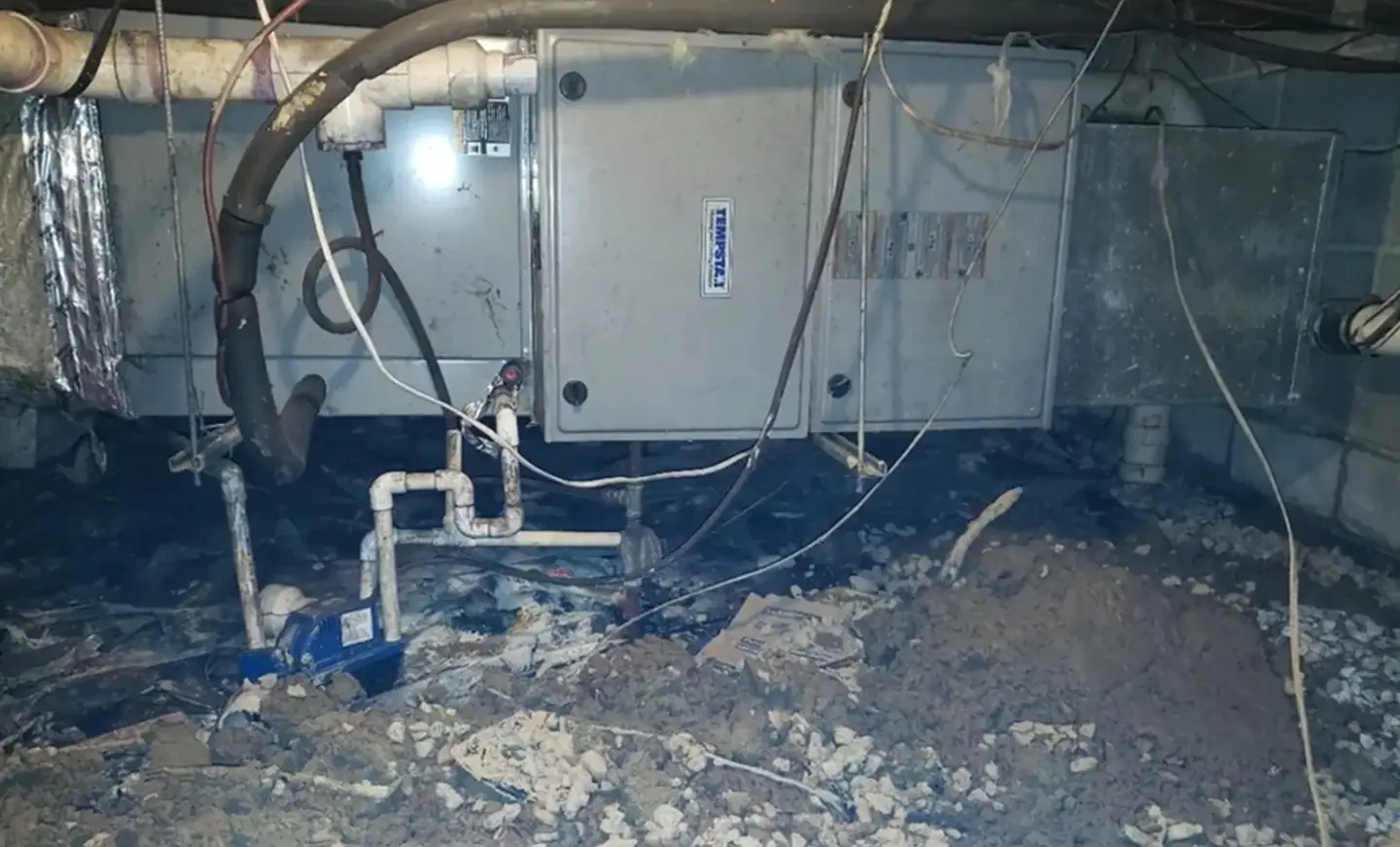
Standing Water Extraction
Standing water can accumulate across the crawl space floor following heavy rainfall, groundwater intrusion, plumbing leaks, or drainage failures.
Leaving accumulated water beneath a home can expose surrounding materials to prolonged moisture and create conditions that contribute to deterioration.
Standing water extraction involves removing accessible pools of water using suitable pumps or professional extraction equipment. The appropriate method depends on water depth, volume, sediment, accessibility, and the condition of the affected area.
After extraction, the crawl space should be evaluated for remaining moisture and affected materials. Removing visible water does not necessarily mean that the space is completely dry.
Crawl Space Floodwater Removal
Floodwater can enter a crawl space when heavy rainfall, surface runoff, drainage problems, or other water intrusion events overwhelm the property's existing protection.
Unlike a minor plumbing leak, flooding may affect a larger area and introduce mud, sediment, debris, and potentially contaminated water.
Floodwater removal focuses on extracting accumulated water and evaluating the affected space for additional cleanup requirements.
The process may involve:
- Assessing the extent of flooding.
- Identifying accessible water accumulation.
- Selecting suitable extraction equipment.
- Removing standing floodwater.
- Evaluating sediment and debris.
- Identifying materials that may require additional attention.
- Determining whether structural drying is necessary.
Floodwater quality should be assessed before cleanup begins. Water that may contain sewage or other contaminants requires appropriate protective measures and specialized handling.
Crawl Space Pump-Out Services
A crawl space pump-out is a water removal process used when accumulated water needs to be extracted from beneath a home.
Depending on the conditions, contractors may use submersible pumps, portable water pumps, or other suitable equipment to remove collected water.
Pump selection depends on the depth of water, the amount of sediment, the available access, and the equipment's operating requirements.
The objective is to remove accumulated water safely and efficiently while avoiding unnecessary disturbance to the crawl space.
Once the pump-out is complete, the affected area should be evaluated to determine whether additional extraction, drying, or water source corrections are necessary.
Rainwater Intrusion Water Removal
Heavy rainfall can contribute to crawl space flooding when water collects around the foundation or enters through vulnerable openings.
Improper exterior grading, blocked drainage pathways, poorly directed downspouts, and saturated surrounding soil can contribute to these conditions.
Rainwater intrusion water removal focuses on extracting water that has entered the crawl space and assessing the conditions that allowed it to accumulate.
Depending on the property, additional recommendations may involve improving surface drainage, redirecting downspouts, inspecting foundation entry points, or evaluating existing drainage systems.
Removing rainwater without considering its entry pathway may leave the property vulnerable to recurring flooding.
Groundwater Intrusion Extraction
Groundwater can enter a crawl space when surrounding soil becomes saturated or water moves through foundation openings and other vulnerable areas.
The amount of water can vary according to soil conditions, groundwater levels, foundation construction, and local environmental factors.
Groundwater extraction involves removing accumulated liquid water from the affected crawl space using an appropriate extraction method.
Because groundwater may continue entering after the initial cleanup, the source and surrounding drainage conditions should also be investigated.
Depending on the findings, homeowners may need additional drainage improvements or a properly designed sump pump system.
Plumbing Leak Water Extraction
A leaking water supply line, drainpipe, plumbing connection, or other component beneath the home can release water directly into the crawl space.
Even a relatively small leak can create ongoing moisture problems when it remains undetected.
Plumbing leak water extraction involves removing accumulated water after the source has been identified and the leak has been addressed or isolated by an appropriately qualified professional.
The process may include:
- Identifying visible water accumulation.
- Assessing the affected crawl space area.
- Extracting collected water.
- Checking surrounding insulation and structural materials.
- Evaluating whether additional drying is needed.
- Coordinating necessary plumbing repairs.
Addressing the leak is essential because water extraction alone will not stop an active plumbing problem.
Sewage and Contaminated Water Extraction
Sewage backups and contaminated flooding can introduce harmful microorganisms and other unwanted substances into a crawl space.
These situations require more careful handling than ordinary clean-water extraction.
The appropriate response depends on the contamination source, extent of affected materials, and applicable health and safety requirements.
Specialized cleanup may involve controlled water removal, protective equipment, appropriate containment, contaminated material handling, and professional sanitation procedures.
Homeowners should avoid entering spaces containing suspected sewage or contaminated floodwater.
This service should only be offered where the assigned service provider has the necessary training, equipment, and qualifications to handle the specific contamination conditions.
Sediment and Debris Removal After Flooding
Floodwater can leave behind mud, sediment, leaves, insulation fragments, and other debris after the visible water has been extracted.
These materials may obstruct drainage pathways, affect accessible surfaces, and complicate subsequent drying or inspection.
Post-flood sediment and debris removal focuses on clearing affected materials that can be safely accessed and handled.
The cleanup approach depends on the nature of the debris and whether contamination is suspected.
Where materials cannot be safely cleaned or are too damaged to remain in place, appropriate removal and disposal may be necessary.
Crawl Space Water Extraction From Hard-to-Reach Areas
Some crawl spaces have limited clearance, restricted entry points, uneven ground, or areas that are difficult to access with conventional equipment.
Water may collect in low sections or behind obstructions, making complete extraction more challenging.
Extraction from hard-to-reach areas requires suitable equipment and an assessment of access and safety conditions.
The contractor should determine which areas can be accessed safely and whether specialized pumping or extraction arrangements are necessary.
Electrical hazards, structural instability, and contaminated water must be considered before anyone enters or operates equipment in the space.
Post-Extraction Moisture Assessment
Removing standing water is an important part of cleanup, but moisture can remain in wood, insulation, soil, and other building materials.
A post-extraction moisture assessment helps determine whether additional drying or material evaluation is needed.
Depending on the situation, the assessment may consider:
- Remaining visible moisture.
- Moisture conditions in exposed wood.
- Wet or displaced insulation.
- Humidity within the crawl space.
- Signs of condensation.
- Areas that may require further inspection.
Moisture assessment helps guide the next stage of the restoration process rather than assuming that water removal alone has resolved the problem.
Crawl Space Structural Drying and Dehumidification
After water extraction, wet materials may require additional drying to help reduce prolonged moisture exposure.
Structural drying may involve appropriate air movement, dehumidification, and moisture monitoring based on the conditions of the affected area.
Air movers help circulate air across suitable surfaces, while dehumidifiers remove moisture from the surrounding air.
The equipment and drying approach should be selected according to the materials involved, humidity conditions, temperature, and extent of water damage.
Drying should be evaluated using appropriate moisture measurements rather than relying only on how dry the space appears.
Water-Damaged Insulation and Material Assessment
Flooding and plumbing leaks can affect insulation, vapor barriers, exposed wood, and other crawl space components.
Wet insulation may lose performance or become unsuitable for continued use, particularly when contaminated.
A material assessment helps determine whether affected components can be cleaned and dried or require removal and replacement.
Structural materials showing signs of deterioration may need evaluation by an appropriately qualified professional.
The goal is to identify the extent of damage and avoid leaving unsuitable materials beneath the home.