01Phase 1: Emergency Dispatch & Safety Isolation
Before any technician enters a flooded crawl space or turns on mechanical equipment, a rigorous life-safety assessment is conducted:
- Submerged Electrical Hazard Check: Water pooling beneath a home frequently comes into contact with low-hanging electrical conduit, junction boxes, or HVAC power feeds. Technicians verify that circuits are isolated or locked out before proceeding.
- Gas Line & Structural Integrity Inspection: Unstable masonry piers, shifted foundation supports, or disconnected natural gas lines are checked prior to entry for site safety.
- Water Source Identification: Technicians assess whether the water stems from an active pressurized supply pipe burst, municipal sewer backup, rising groundwater table, or storm runoff through foundation vents. If an active plumbing rupture is present, main shut-off valves are engaged.
02Phase 2: Diagnostic Assessment & Moisture Mapping
Once access is deemed safe, specialists perform a thorough diagnostic evaluation to classify the water and determine the precise scope of work:
- Water Categorization (IICRC S500):
- Category 1 (Clean Water): Fresh water from a burst supply pipe before contacting organic soil.
- Category 2 (Grey Water): Water containing chemical residue or laundry/dishwasher discharge.
- Category 3 (Black Water): Highly contaminated water resulting from groundwater intrusion, storm runoff, or sewage backups containing soil pathogens, fertilizers, and animal waste.
- Moisture Mapping: Using dual-depth pin and pinless moisture meters alongside FLIR thermal imaging cameras, technicians establish baseline moisture readings across unaffected materials to determine the regional Equilibrium Moisture Content (EMC).
- Damage Documentation: Digital photographs, water depth measurements, and cause-of-loss reports are compiled to assist homeowners with property insurance claims where sudden and accidental plumbing failures are involved.
03Phase 3: High-Volume Pumping & Silt Extraction
Bulk water extraction is executed rapidly to relieve hydrostatic pressure and stop wood framing from absorbing additional moisture:
- Submersible Trash Pumps: Industrial cast-iron pumps equipped with vortex impellers are lowered into the lowest points of the crawl space or temporary sump basins. These pumps evacuate hundreds of gallons per minute and are engineered to pass solids, silt, and small debris without clogging.
- Gas-Powered Utility Pumps: Deployed in severe flood scenarios where high water volume requires independent power.
- High-Lift Wet Vacuum Systems: Portable extraction units with extended hose runs extract shallow puddles and mud deposits trapped in uneven soil pockets between piers where pump impellers cannot reach.
- Regulated Discharge: All extracted floodwater is routed safely away from the foundation to approved municipal storm or sanitary discharge points in compliance with local regulations.
04Phase 4: Saturated Material Tear-Out & Debris Clearing
Water-damaged porous materials inside a crawl space act as microbial breeding grounds and must be addressed immediately:
- Saturated Fiberglass Batt Insulation: Saturated batt insulation collapses under its own weight, permanently loses its thermal R-value, and holds gallons of water against wooden floor joists. Technicians cut and remove all soaked insulation, packing it into heavy 6-mil contractor bags for safe disposal.
- Degraded Ground Covers: Torn, contaminated, or waterlogged 6-mil plastic sheeting is extracted to expose the underlying earth for proper drying.
- Mud and Silt Excavation: Accumulations of mud, leaves, and organic debris washed in during flooding events are cleared using low-profile utility sleds to reduce damp organic debris that can retain moisture.
05Phase 5: EPA-Registered Antimicrobial Sanitization
Because groundwater and dirt-floor floodwaters carry active bacteria and fungal spores, thorough chemical decontamination is essential:
- ULV Cold Fogging & Direct Spray Application: Exposed subflooring, floor joists, sill plates, and foundation walls are treated with EPA-registered botanical (thymol-based) or hospital-grade quaternary ammonium antimicrobials.
- Odor & Surface Contamination Management: Where appropriate for the water category and site conditions, EPA-registered antimicrobial products are applied to accessible framing surfaces to help address surface microbial contamination and odors.
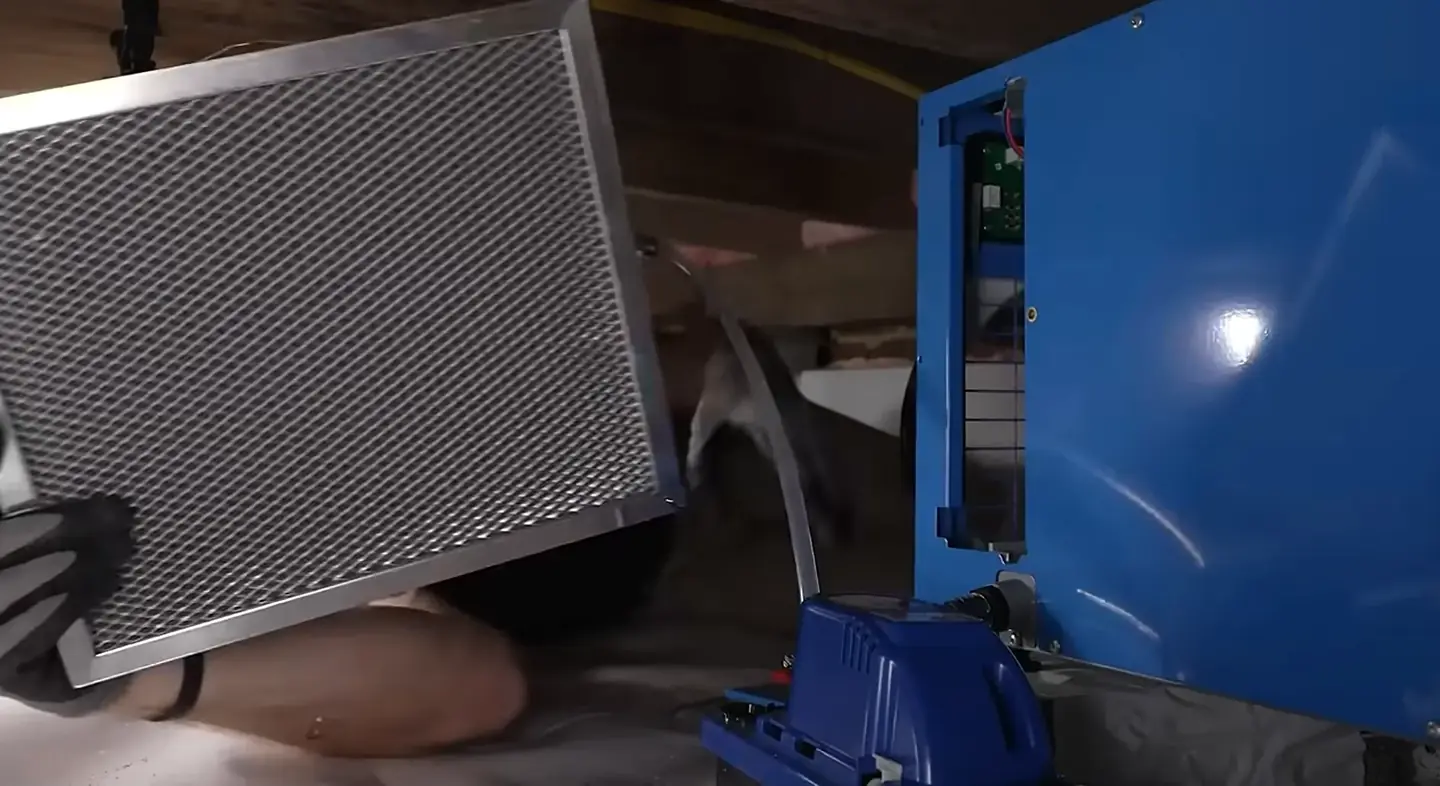
- HEPA Air Scrubbing: Commercial HEPA 500 air filtration units run continuously to capture airborne mold spores, particulate matter, and dust stirred up during the extraction process.
06Phase 6: Psychrometric Structural Drying & Dehumidification
Liquid water extraction removes only the visible bulk water. Structural wood timbers (joists, girders, and sills) absorb immense amounts of bound water that must be drawn out through controlled psychrometric drying:
- Low-Profile Axial Air Movers: High-velocity, compact commercial blowers are positioned to sweep air horizontally across wet floor joists and damp soil, accelerating the evaporation rate of moisture into the air.
- Low Grain Refrigerant (LGR) Dehumidifiers: Industrial LGR dehumidifiers extract tens of gallons of water vapor daily, even in cold, damp subterranean environments where standard household units fail. Desiccant dehumidifiers are deployed when ambient temperatures fall below 45 degrees Fahrenheit.
- Closed Drying Chamber: Foundation vents and crawl space access doors are sealed temporarily to prevent humid outdoor air from entering, allowing the dehumidification equipment to create a super-dry microclimate.
- Daily Moisture Tracking: Technicians record daily relative humidity, temperature, and wood moisture content readings to track drying progress.
07Phase 7: Moisture Verification & Prevention Guidance
The extraction and drying phase concludes after documented post-extraction checks and moisture readings are recorded:
- Moisture Monitoring Benchmark: Drying equipment operates until moisture readings on accessible framing lumber approach project target levels (typically below 16% wood moisture content) based on baseline property readings.
- Final Visual & Moisture Review: A walk-through using moisture meters and thermal imaging documents post-drying readings across accessible sill plates and subflooring and notes any areas needing separate remediation or repair.
- Long-Term Moisture Defense Recommendations: Once the immediate emergency is mitigated, technicians provide actionable advice on preventing future flooding, including:
- Installing a permanent sump pump system equipped with a battery backup.
- Adding interior perimeter French drain trenching along foundation footings.
- Upgrading to a clean, heavy-duty 10-mil to 20-mil puncture-resistant vapor retarder.
- Correcting exterior downspout extensions and surface grading.