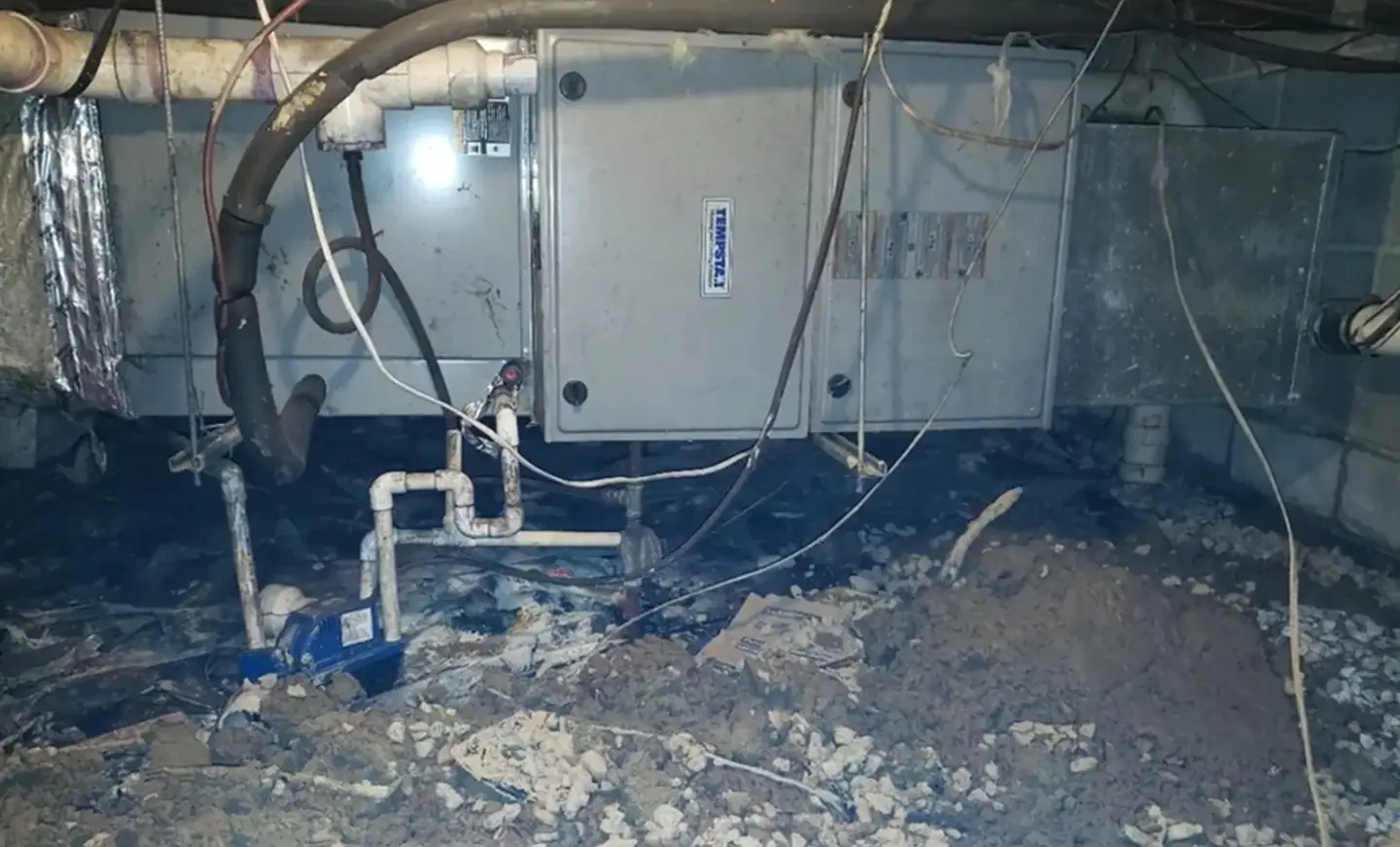
1. Crawl Space Water Assessment
A proper removal process begins with understanding the water conditions beneath the home. An assessment may involve examining visible standing water, identifying possible entry points, evaluating access limitations, and determining whether water is continuing to enter the crawl space.
This information helps establish the appropriate extraction approach and identify potential safety concerns.
2. Standing Water Extraction
Standing water extraction involves removing accumulated water from accessible crawl space areas using suitable equipment.
Depending on water depth, volume, and accessibility, extraction equipment may include submersible pumps, portable water extraction systems, or other appropriate pumping equipment.
3. Crawl Space Water Pump-Out
Properties experiencing substantial water accumulation may require a pump-out process.
The objective is to remove collected water from the affected areas and direct it to an appropriate discharge location. The equipment and pumping arrangement should account for the volume of water, crawl space accessibility, and discharge requirements.
4. Emergency Crawl Space Water Extraction
Unexpected flooding can occur after heavy rainfall, plumbing failures, or other water intrusion events.
Emergency extraction involves evaluating the situation, identifying potential hazards, and determining the appropriate steps for removing accumulated water.
Appointment availability and emergency services depend on the actual provider and confirmed coverage in the relevant location.
5. Crawl Space Water Cleanup
Removing standing water may leave mud, sediment, and other debris behind.
Depending on the conditions, related cleanup activities may include collecting accumulated debris, addressing affected materials, and handling potentially contaminated materials using appropriate precautions.
The cleanup process should be determined by the type of water involved and the condition of the affected area.
6. Floodwater Removal
Floodwater can enter crawl spaces through groundwater intrusion, surface runoff, foundation openings, and other pathways.
Removing floodwater requires consideration of its depth, volume, accessibility, and potential contamination.
Where sewage or other hazardous contamination is suspected, appropriate professional handling and safety procedures are necessary.
7. Post-Extraction Moisture Assessment
Removing visible standing water does not automatically mean that the crawl space is completely dry.
After extraction, affected insulation, accessible wooden materials, and other surfaces may require further evaluation to determine whether additional drying or restoration is necessary.
Our primary focus remains the removal of accumulated crawl space water and directly related cleanup activities.